Welcome to the Macosko Lab!
Macosko Lab

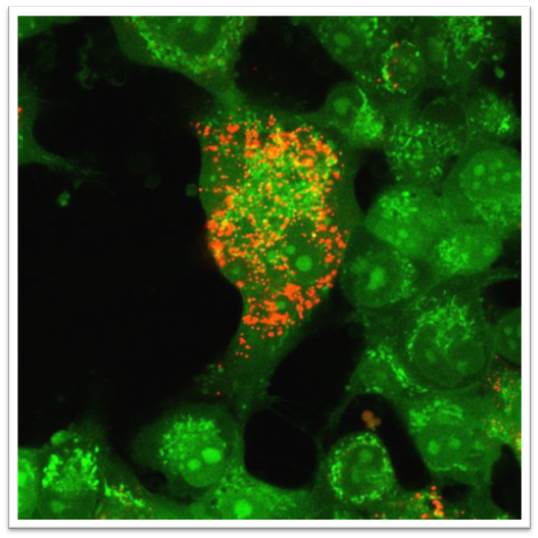
We study the physics of different biological systems. In the past we have looked at kinesin motors and vesicles with their associated drag force. More recently, we have shifted our focus towards cancer research. Specifically, we are interested in the mechanical properties of metastatic cells. Do metastatic cells have different mechanical properties than their non-cancerous counterparts? Do these properties allow metastatic cells to infiltrate new tissue and spread cancer? We have examined normal, tumorigenic and metastatic breast cells and found interesting mechanical differences between all three. Currently we are examining the movements of metastatic breast cells in a three-dimensional environment. In particular, we want to know if these cells preferentially crawl from soft parts of their three-dimensional environment to stiffer parts, and, if so, we want to know how their mechanical properties influence this preference and perhaps change as a result of their stiffer surroundings. In the end, we hope to better understand the first steps in metastasis in order to stop this deadly process.
Figure: BC3 cells expressing actin GFP and peroxisome RFP.
WFU
Center for Structural Biology |
WFU
Center for Nanotechnology |
Department
of Physics |
Graduate
Studies in Physics
|